Why Smart eCommerce Brands Are Shifting From Ads to SEO?
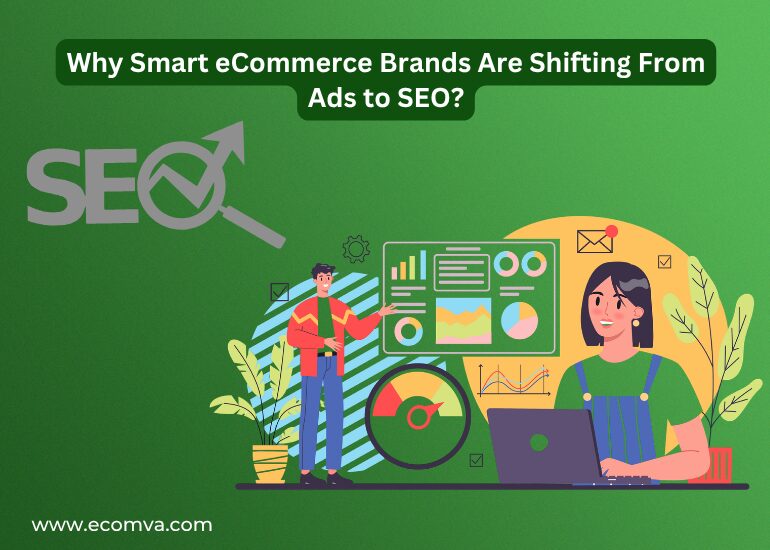
If you’ve been running an online store for a while, you’ve probably noticed one thing: ads are getting expensive. What worked a year ago doesn’t stretch as far today. Cost per click is up. Competition is tighter. And scaling purely through paid channels? It starts to feel like you’re pouring more money into just maintaining the same results.
That’s where things shift. More eCommerce brands now want solutions that don’t disappear the moment you pause a campaign. That’s where e-commerce SEO services come into the picture.
Not as a quick fix. But as something that builds over time and keeps working.
What Are E-commerce SEO Services, Really?
At a basic level, SEO for eCommerce is about getting organic traffic. It helps your store show up when people search for products you sell.
But in reality, it involves various components.
SEO doesn’t mean adding keywords to product pages or writing a few blogs. A good e-commerce SEO service provider looks at your entire store. They analyze how it’s structured and how users navigate it. During the audit, our experts also test how search engines crawl it and where opportunities are being missed.
That includes:
- Product and category page optimization
- Technical fixes (site speed, indexing, mobile experience)
- Content creation that attracts buyers, not just visitors
- Internal linking and site architecture
And unlike general SEO, eCommerce has more moving parts. Hundreds (sometimes thousands) of pages. Filters. Variants. Duplicate content risks. It’s a different game.
That’s why many businesses eventually move toward professional e-commerce SEO services instead of trying to patch things themselves.
Why SEO Matters More for eCommerce in 2026
Here’s the part most businesses underestimate: how much buying actually starts with search.
- Around 68% of online experiences begin with a search engine
- Roughly 53% of all website traffic comes from organic search
- SEO leads have a 14.6% close rate, compared to just 1.7% for outbound methods
Those aren’t small gaps.
What it really means is this: people are already looking for what you sell. The question is whether they find you or your competitor.
Paid ads can put you in front of them quickly. But SEO keeps you there. And over time, that compounds.
Core Strategies Behind High-Performing E-commerce SEO
There isn’t a single tactic that makes SEO work. It’s usually a mix of things done consistently.
1. Keyword Targeting Based on Intent
There’s a difference between someone browsing and someone ready to buy. “Running shoes” is broad. “Best running shoes for knee pain”. That’s the intent. Good SEO focuses on those intent-heavy searches. The kind that leads to action, not just clicks.
2. Product & Category Page Optimization
This is where most revenue comes from, but it’s often under-optimized.
Small changes matter here:
- Better titles and descriptions
- Clear structure
- Schema markup
- Smart internal links
It’s not flashy work, but it moves the needle.
3. Technical SEO (The Quiet Fixer)
This part usually goes unnoticed… until it starts hurting rankings. Things like:
- Slow page speed
- Broken links
- Duplicate content
- Poor mobile experience
Google doesn’t ignore these. And neither should you.
4. Content That Brings Buyers In
Not everyone is ready to buy immediately. Some are researching.
That’s where content comes in:
- Buying guides
- Comparisons
- “Best of” lists
- Informational blogs
- FAQs
- Use case videos
- Benefits & feature explainers
- Industry reports
These pages pull people in early and guide them toward a purchase. Need Amazon A+ content for your e-commerce business? Our Ecommerce store management VAs can help.
5. Building Authority Over Time
Backlinks still matter. Not in a spammy way, but in a credibility sense. When other sites link to yours, it signals trust. A good e-commerce SEO agency focuses on this steadily, not aggressively.
Tools Behind the Process (What Actually Powers It)
| Purpose | Tools Used | What It Helps With |
|---|---|---|
| Keyword Research | Ahrefs, SEMrush, Google Keyword Planner | Finding high-intent keywords and measuring search demand |
| Performance Tracking | Google Search Console, Google Analytics 4 | Monitoring traffic, clicks, and user behavior trends |
| Technical SEO Audits | Screaming Frog, Sitebulb | Identifying crawl issues, broken links, and site errors |
| Rank Tracking | SE Ranking, AccuRanker | Tracking keyword positions and visibility changes |
| Competitor Analysis | Ahrefs, SEMrush | Understanding competitor strategies and identifying gaps |
| User Behavior Insights | Hotjar, Microsoft Clarity | Analyzing user interactions and on-site behavior patterns |
| On-Page Optimization | Surfer SEO, Clearscope | Optimizing content structure and relevance for rankings |
| Backlink Analysis | Ahrefs, Majestic | Evaluating link profiles and authority signals |
AI Tools & Workflows in E-commerce SEO
| Workflow Stage | AI Tools Used | How It’s Used in Practice |
|---|---|---|
| Keyword & Topic Discovery | ChatGPT, Ahrefs AI, SEMrush Keyword Magic Tool | Generate keyword ideas, cluster topics, and identify long-tail opportunities |
| Search Intent Mapping | ChatGPT, Clearscope | Group keywords by intent (informational, commercial, transactional) |
| Content Brief Creation | Frase, Surfer SEO | Create structured briefs based on top-ranking content patterns |
| AI Content Drafting | Claude, Jasper | Produce first drafts for blogs, product pages, and category content |
| Content Optimization | Surfer SEO, Clearscope | Refine content using keyword coverage, NLP terms, and SERP alignment |
| Product Description Scaling | ChatGPT (custom prompts), Copy.ai | Generate consistent, SEO-friendly product descriptions at scale |
| Internal Linking Automation | Link Whisper | Suggest and automate contextual internal linking |
| Technical Issue Detection | Screaming Frog + GPT workflows | Identify technical issues and prioritize fixes using AI analysis |
| SERP Analysis | ChatGPT + manual review | Analyze ranking pages to understand structure, intent, and content gaps |
| A/B Testing (Ad Copy / Meta) | Google Ads AI, ChatGPT | Create and test variations for titles, descriptions, and creatives |
| User Behavior Analysis | Microsoft Clarity + AI insights | Analyze session data to identify UX friction and improvement areas |
| Workflow Automation | Zapier, Make (Integromat) | Automate publishing, reporting, and cross-tool data flows |
How SEO Results Actually Drive Long-Term Growth?
This is where things start to separate from paid ads.
Consistent Traffic Without Ongoing Spend
Once pages rank, they keep bringing visitors. You don’t pay for every click. You get organic growth that converts into loyal customers.
Lower Customer Acquisition Costs
Over time, SEO becomes one of the most cost-efficient channels. Especially compared to ads that need a continuous budget.
Better Conversion Rates
Organic traffic often converts better. Why? Because it’s driven by intent. People search when they need something. Not when they’re constantly interrupted with ads. Excessively paid campaigns can even drive away customers.
Compounding Results
This part is easy to overlook. A blog you publish today might not do much next week. But give it a few months, and it can start bringing steady traffic. Multiply that across multiple pages, and things stack up.
Where SEO Fits Into Ecommerce Store Management?
SEO doesn’t sit in isolation.
It works best when it’s aligned with your overall Ecommerce store management. Things like product updates, user experience, and conversion optimization.
For example:
- Updating product pages improves both rankings and conversions
- Better site structure helps users and search engines
- Faster load times reduce drop-offs
It’s all connected.
Choosing the Right SEO Partner (What Actually Matters)
Not every provider is the same. And this is where a lot of businesses get stuck.
If you’re looking for an e-commerce SEO service provider, a few things help separate the good from the average:
- They talk about results, not just rankings
- They show actual case outcomes
- They explain what they’re doing (not hide behind jargon)
- They focus on strategy, not just tasks
And a small warning, if someone guarantees rankings, that’s usually a red flag.
Common Mistakes That Hold Stores Back
You’ll see these often:
- Ignoring technical SEO until something breaks
- Targeting keywords that don’t convert
- Leaving product pages thin or duplicated
- Expecting results too quickly
- Treating SEO as a one-time project
SEO isn’t instant. But done right, it’s reliable.
Final Thoughts
There’s no shortage of ways to drive traffic in 2026. But most paid ads come with a catch: you stop paying, and the traffic stops too. SEO works differently.
It builds slowly, sometimes quietly. Then one day, it starts pulling in consistent traffic without constant input. That’s why more brands are investing in e-commerce SEO services now—not just for visibility, but for stability.
Because in the long run, predictable growth beats temporary spikes. Want a free SEO audit for your ecommerce business? Book a consultation!
FAQs
1. What do e-commerce SEO services include?
E-commerce SEO services typically include keyword research, product and category optimization, technical SEO fixes, content creation, and ongoing performance tracking to improve visibility and rankings.
2. How long does e-commerce SEO take to show results?
Most stores begin to see noticeable improvements within three to six months. The timeline varies depending on competition, site condition, and how consistently optimizations are applied.
3. Are e-commerce SEO services worth it for small businesses?
Yes. Even with limited budgets, SEO builds consistent organic traffic over time and reduces long-term dependence on paid advertising.
4. What is the difference between SEO and paid ads?
SEO focuses on building long-term organic visibility, while paid ads generate immediate traffic that stops once spending ends. A balanced strategy typically uses both.
5. How do I choose the right e-commerce SEO agency?
Look for proven results, clear and transparent processes, and direct experience working with ecommerce businesses in your niche or platform.