Amazon Seller Software vs a Virtual Assistant: What Actually Runs Your Store Better?


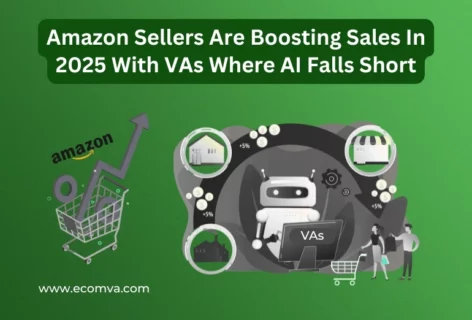
Every Amazon store that is growing eventually reaches a dead end at the exact moment when sales are increasing, products are multiplying, and suddenly one person cannot manage pricing, inventory, customer queries, and advertising simultaneously. That’s when the debate begins: whether you should get Amazon seller tools or hire a Virtual Assistant?
Honestly, most sellers ask this backwards. They pick one option because a friend swears by it, then wonder six months later why nothing changed. The real answer depends on what’s actually breaking in your operation, not which option sounds more impressive on a podcast.
Amazon Seller Software: What It Actually Does for Your Store
Amazon seller software is built for speed and repetition. It watches your listings around the clock and reacts faster than any human could. A good Amazon repricing tool, for example, adjusts your prices in seconds when a competitor undercuts you. Try doing that manually 40 times a day. Not happening.
This is where automation software earns its keep:
- Repricing based on competitor movement
- Inventory alerts before you go out of stock
- PPC bid adjustments tied to real performance data
- Profit and fee tracking across every SKU
Sellerboard, Helium 10, and similar Amazon seller apps fall into this category. They’re consistent. They don’t take sick days. And they scale without needing extra hiring.
But here’s the catch. Software doesn’t think. It follows rules you set up, and if those rules are wrong, it executes the mistake perfectly and quickly. It can’t write a thoughtful reply to an angry customer. It can’t judge whether a new supplier photo actually looks good on a product page. That judgment gap matters more than most sellers expect.
Where Does a Virtual Assistant Fit In
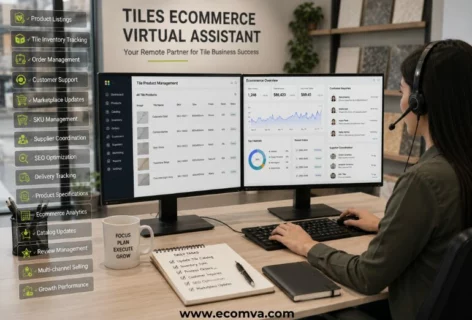
A virtual assistant handles the parts of the business that need a brain, not just a rule set. Think listing copywriting, customer service tone, competitor research that requires actual reading, and catching weird account health flags before they become suspensions.
A capable VA can usually manage:
- Product listing creation and keyword-based copy
- Customer messages and review response
- Case log management with Amazon Seller Support
- Basic reporting and day-to-day account monitoring
Their work hours are limited. When it comes to training, there is an inevitable need for time, and the final results depend on whom you hire and how well your processes have been described to them. In cases like that, a VA who cannot follow the set procedures will make the job even harder than if you do it yourself. Definitely a piece of info to have, just as soon as you start the hiring process!
Amazon Repricing Tool vs Virtual Assistant: Where Each One Wins
Software will always beat you in areas you define with rules. Something that does not need context. The cost efficiency of the software is another factor, because for thousands of SKUs you’d only need one subscription.
A VA wins on anything that needs judgment, tone, or a human decision. Write a listing that actually converts. Respond to a customer who’s actually upset. Spot a policy violation buried in an email from Amazon. All these are VA-centric.
Here’s a simple scenario. For example, a seller having 15 SKUs with steady demand calls for automation mostly to stay competitive only on price. Meanwhile, a seller who keeps on releasing new products each month, deals with a supplier problem, attend buyers’ questions constantly would actually benefit more from having an experienced employee rather than just relying on software alone.
Best Amazon Tools Strategy: Why Most Stores Need Both
This is the part competitor content usually skips. Amazon seller software and a virtual assistant aren’t competing for the same job. They’re solving two different problems.
Software protects your margins and reacts to the market in real time. A VA protects your brand voice, your account health, and your customer relationships. Skip the software, and you’ll bleed money to slow manual pricing. Skip the VA, and you’ll have a technically efficient store that feels cold, generic, and prone to policy mistakes nobody caught in time.
The sellers who actually scale usually run both, just not always at full scale from day one. A common pattern:
- Under $10K/month: start with one or two automation software tools, delegate the rest yourself
- $10K to $50K/month: add a part-time VA for listings and customer service
- $50K+/month: run full Amazon seller software stack alongside a trained VA team
Choosing Amazon Automation Software or a Virtual Assistant for Your Store
Ask yourself what’s actually costing you money or time today. If you’re losing the Buy Box repeatedly, that’s a software problem. If customer messages are piling up and reviews are slipping, that’s a people problem. Rarely is it purely one or the other.
Budget matters too. A solid Amazon repricing tool often costs less per month than a single day of VA labor. Start where the pain is worst, track results for 60 to 90 days, then add the second piece once the first one is actually working.
Not sure whether your store needs better software, a trained VA, or both? Talk to our team, and we’ll map out exactly what your operation is missing- no generic checklist, just a plan based on your actual numbers.
Frequently Asked Questions
1. Is Amazon seller software better than a virtual assistant?
Neither is universally better. Amazon seller software is ideal for repetitive, rules-based tasks such as repricing, inventory alerts, and automated monitoring. A virtual assistant is better suited for judgment-based responsibilities such as customer service, listing management, and operational decision-making. For many established Amazon stores, using both provides the best results.
2. Can a virtual assistant replace Amazon seller software?
Not entirely. A VA can manually monitor prices and inventory, but automation software can process data and respond to changes much faster. Using a VA for repetitive tasks such as repricing may also be less efficient than assigning those responsibilities to specialized software.
3. What’s the cheapest way to start automating my Amazon store?
Start with a single tool that addresses your biggest operational problem. Many sellers begin with a focused solution, such as repricing software or inventory alerts, before investing in a larger software stack or additional support.
4. Do I need Amazon FBA tools if I already have a virtual assistant?
Yes, especially if you manage a growing FBA business. A virtual assistant can identify and address issues, while FBA tools can automatically monitor areas such as fees, reimbursements, and inventory velocity at a scale that is difficult to manage manually.