How to Outsource Ecommerce Operations Without Losing Control of Your Store

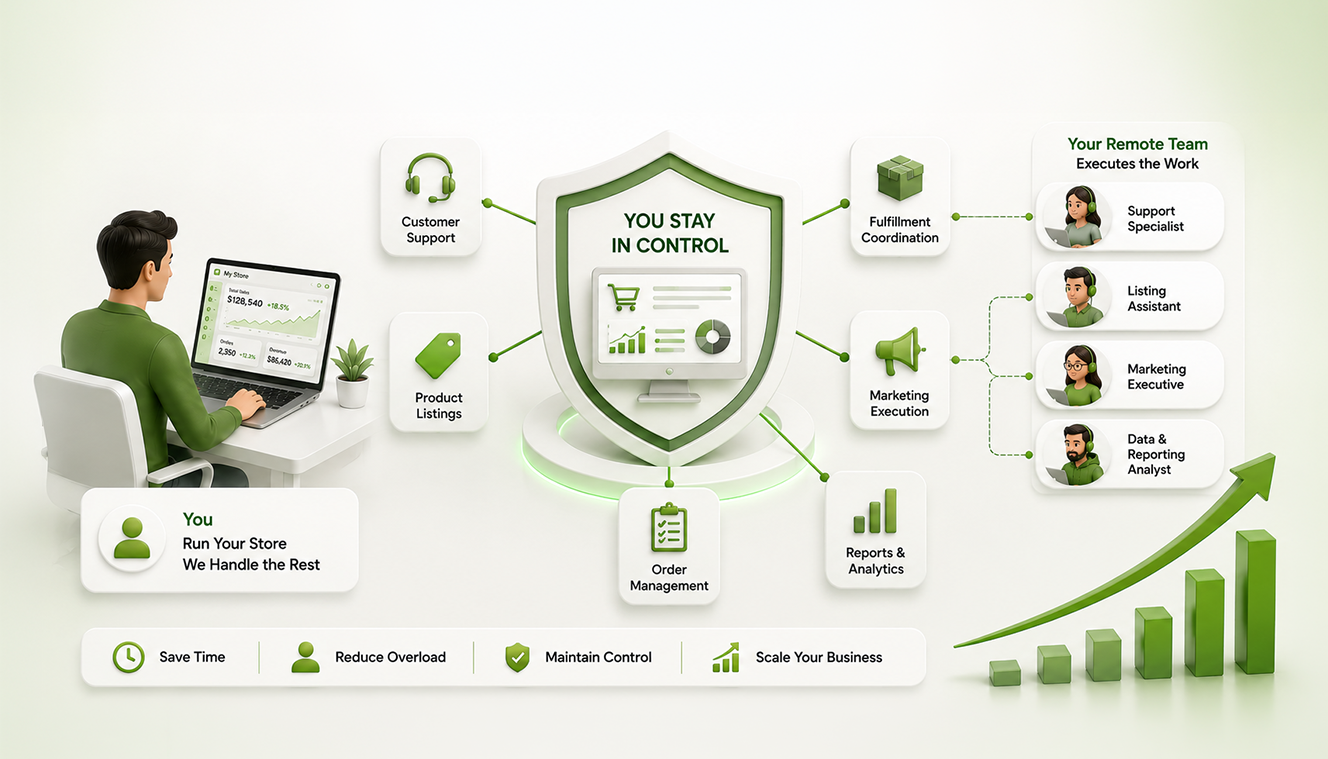
Running an e-commerce business sounds exciting. And it is. But once orders start coming in, things get messy, fast. You’re managing inventory, replying to customers, fixing product pages, checking ads, tracking shipments, all at once. And somewhere in between, you’re supposed to grow the business too. That’s where ecommerce outsourcing comes in, not as a shortcut, but as a smarter way to run things.
Let’s break it down simply. What to outsource, when to scale, and how to build a remote team that actually works.
Why Ecommerce Outsourcing Is Not Optional Anymore
Initially, doing everything yourself makes sense. You learn the business inside out.
But it slows you down after a point. If you’re spending hours on repetitive tasks, you’re not focusing on growth. And that’s a problem.
Ecommerce outsourcing helps you:
- Free up your time for strategy and growth
- Reduce operational overload
- Access skilled professionals without hiring full-time
- Scale faster without burning out
And honestly, most successful e-commerce brands you see today? They’re not doing everything in-house.
What Ecommerce Tasks Should You Delegate First?
Everything need not be outsourced. But some tasks are better off off your plate. Here’s a simple breakdown for ecommerce task delegation:
1. Customer Support
Responding to emails, handling returns, answering queries – it’s time-consuming. A trained support assistant can handle:
- Order tracking questions
- Refund and return requests
- Basic product queries
This alone can save you hours every day.
2. Product Listing & Catalog Management
Uploading products, writing descriptions, updating prices – it’s repetitive. You can outsource ecommerce listing tasks like:
- Product uploads
- Image optimization
- Description formatting
- SKU and inventory updates
It’s detail-heavy work. Perfect for delegation.
3. Order Processing & Fulfillment Coordination
Once orders start scaling, this becomes chaotic. A virtual assistant can:
- Process orders daily
- Coordinate with suppliers or warehouses
- Track shipments and update statuses
This ensures smoother operations without constant manual checks.
4. Basic Marketing Tasks
You don’t have to outsource ecommerce strategy immediately. But execution? Yes.
Delegate things like:
- Social media posting
- Email campaign setup
- Basic ad monitoring
- Content formatting
This keeps your marketing consistent, even when you’re busy.
5. Data Entry & Reporting
Reports are important. But creating them manually every time? Not the best use of your energy.
Outsource:
- Sales reports
- Inventory tracking sheets
- Performance dashboards
It keeps your decisions backed by data without wasting your time.
When Should You Start Outsourcing?
People are most confused at this point. “Should I wait till I grow more?” “Is it too early?” Here’s the truth: waiting too long is the bigger mistake.
You should consider ecommerce outsourcing when:
- You’re working more than 8–10 hours daily
- Orders are increasing, but processes feel messy
- Customer queries are getting delayed
- You’re unable to focus on growth activities
- Small mistakes are starting to happen often
If even 2–3 of these feel familiar, it’s probably time.
Signs You’re Ready for Scaling Ecommerce Operations
Scaling ecommerce operations isn’t just about more sales. It’s about building systems. Here are clear signs you’re ready:
| Indicator | What It Means |
|---|---|
| Consistent monthly orders | Demand is stable enough to support delegated operational tasks |
| Repeat customers increasing | Customer retention is improving, indicating growing business traction |
| Operational delays | Manual workflows are becoming a bottleneck and may require additional support |
| Revenue is predictable | More consistent cash flow makes outsourcing decisions easier to plan |
Scaling without outsourcing usually leads to chaos. Scaling with the right support feels controlled.
How to Build a Reliable Remote Ecommerce Team
Now comes the important part – building the team. It is crucial because outsourcing works only with the right people.
Step 1: Start Small
Don’t hire 5 people at once. Start with one role. Maybe a customer support VA or product listing assistant. Test the process. Then expand.
Step 2: Define Tasks Clearly
Vague instructions lead to poor results. Instead of saying: “Handle product listings.” Say: “Upload 20 products daily with images, pricing, and SEO-friendly descriptions.”
Clarity changes everything.
Step 3: Create Simple SOPs
Standard Operating Procedures don’t have to be complicated. Even a simple Google Doc with steps works. This ensures:
- Consistency
- Faster training
- Less dependency on individuals
Step 4: Use the Right Tools
A remote team needs structure. Use tools like:
- Task managers (Trello, Asana)
- Communication tools (Slack, WhatsApp)
- File sharing (Google Drive)
It keeps everyone aligned, even across time zones.
Step 5: Start with a Trial Period
Before a long-term commitment, test for 1–2 weeks. Check:
- Communication
- Accuracy
- Speed
- Understanding of tasks
A short trial saves long-term headaches.
Should You Hire an Ecommerce VA or an Agency?
This depends on your stage. Here’s a quick comparison:
| Option | Best For | Pros | Cons |
|---|---|---|---|
| Ecommerce VA | Small to mid-sized ecommerce businesses needing ongoing operational support | Cost-effective, flexible, and scalable for recurring tasks | Requires onboarding and business-specific training to maximize efficiency |
| Agency | Growing brands requiring multi-disciplinary expertise and larger project capacity | Access to specialized teams, broader capabilities, and faster project execution | Higher cost and potentially more structured communication processes |
If you’re just starting to outsource online store operations, a VA is usually enough. You can combine both as and when you grow.
Common Mistakes to Avoid in Ecommerce Outsourcing
Outsourcing sounds simple. But small mistakes can cost you. Watch out for these:
- Delegating without clear instructions
- Expecting perfection instantly
- Not documenting processes
- Hiring too fast without testing
- Avoiding communication
Give your team time to learn. Systems take a little effort at first. But they pay off later.
Is Outsourcing Ecommerce Operations Actually Worth It?
For most growing stores, yes. It usually costs less than a full-time local hire. It further gives you access to people who specialize in the exact task you need. And it frees up your time for the decisions only you can make.
Hiring an ecommerce VA is not about losing control. It’s about gaining time, clarity, and the ability to grow without feeling stressed.
Start small. Delegate wisely. Build slowly. And once things click, you’ll wonder why you didn’t do it earlier.
Frequently Asked Questions
1. What is ecommerce outsourcing?
Ecommerce outsourcing involves delegating operational responsibilities such as customer support, order processing, inventory management, and product maintenance to external professionals or specialized teams.
2. Is it safe to outsource an online store?
Yes. When clear processes, secure tools, and appropriate access controls are in place, outsourcing can be a safe and effective way to improve operational efficiency and support business growth.
3. How much does it cost to hire an ecommerce VA?
The cost varies depending on the virtual assistant’s experience, expertise, and location. For many businesses, hiring an ecommerce VA is more cost-effective than employing full-time in-house staff.
4. What tasks should I outsource first?
It is generally best to begin with repetitive operational tasks such as customer support, product uploads, inventory updates, and order management before delegating more specialized responsibilities.
5. Can outsourcing help in scaling ecommerce operations?
Yes. Outsourcing reduces operational workload, improves efficiency, and allows business owners to focus on strategic initiatives that support long-term ecommerce growth.