A Business-Focused Approach to Selecting Email Automation Service in 2026
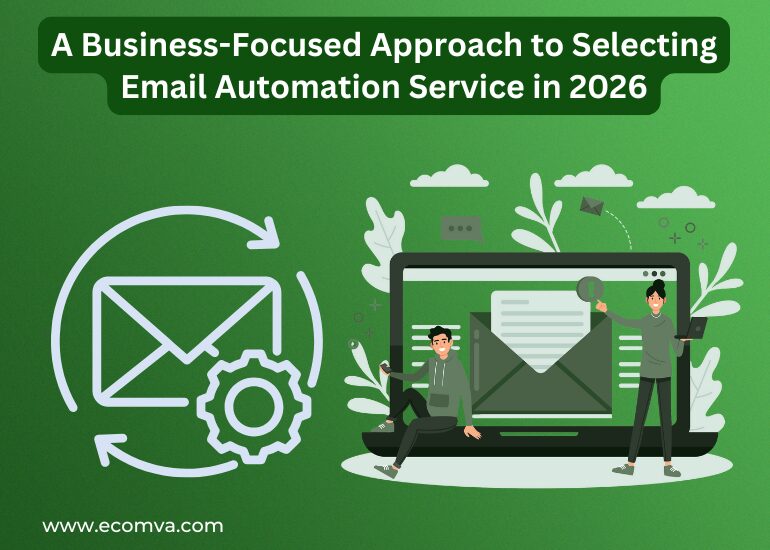
An email automation service has become a core operational system for modern businesses rather than a supporting marketing tool. In 2026, companies manage larger databases and more segmented audiences than ever before. As communication volume increases, manual handling becomes unreliable and difficult to scale.
Email automation now supports
- Sales enablement
- Customer onboarding
- Retention workflows
- Account-based communication
When implemented correctly, automation reduces operational strain. It also maintains consistency across every customer interaction.
However, many businesses still struggle to select the right service. The challenge lies in aligning automation with real operational workflows and data structures. This guide explains how businesses should evaluate and select an email automation service in 2026 using a structured, execution-focused approach.
Why Email Automation Has Shifted From Marketing Tool to Business Infrastructure
Email automation used to operate in isolation from core systems. Campaigns were built, scheduled, and measured separately from CRM data and sales activity. That approach no longer works.
In 2026, email automation must connect directly to customer records, behavioral data, and lifecycle stages. Businesses now rely on automation to handle:
- onboarding sequences after account creation
- follow-up messaging based on product usage
- transactional communication tied to operational triggers
- retention workflows based on engagement signals
An effective email automation service operates as an extension of the business process. It ensures that messages reflect accurate data, follow defined rules, and adapt when customer behavior changes. Without this structure, automation becomes noisy, unreliable, and difficult to maintain.
What a Business-Ready Email Automation Service Must Support
Not all automation platforms are built for operational scale. Some are designed primarily for campaign execution, while others support deeper integration and governance.
A business-ready email automation service provider must support five core capabilities.
1. Data-Centered Workflow Design
Automation must originate from verified data sources. Customer actions, CRM fields, and lifecycle stages should trigger communication logically and consistently.
A suitable platform allows teams to define workflows that reference:
- CRM contact properties
- behavioral events
- account status changes
- time-based conditions
This ensures that messages are sent based on facts rather than assumptions.
2. Segmentation That Reflects Real Business Logic
Segmentation should not depend solely on basic filters such as location or signup date. Businesses require segmentation that aligns with operational reality.
Effective segmentation includes:
- lifecycle stage classification
- engagement thresholds
- purchase or usage frequency
- account maturity indicators
The best email automation service allows segmentation rules to remain readable, auditable, and adjustable as the business evolves.
3. Controlled Access and Workflow Ownership
As automation grows, multiple teams interact with the same system. Without access controls, workflows become fragile.
A reliable email automation service provider supports role-based permissions, version tracking, and workflow ownership. This prevents accidental changes and supports accountability.
4. Reporting That Supports Decisions
Automation reporting should provide operational clarity, not just marketing metrics. Open rates and clicks matter, but they do not explain workflow health.
Business-ready reporting includes:
- delivery failure monitoring
- trigger execution validation
- sequence completion rates
- lifecycle movement analysis
These insights help teams improve automation logic rather than guessing outcomes.
5. Long-Term Maintainability
Automation systems must remain usable over time. As data volume grows and workflows multiply, complexity should remain manageable.
A strong email automation service supports documentation, naming conventions, and structured workflow design. This prevents operational debt and reduces dependency on specific individuals.
Evaluating Automation Tools Through a Business Lens
Many businesses compare tools based on features alone. A better approach is to evaluate how the tool fits operational reality.
When reviewing platforms, businesses should ask:
- Can workflows reflect our actual customer journey?
- Can data dependencies be clearly mapped and tested?
- Will reporting help identify issues before customers are affected?
- Can workflows scale without becoming fragile?
Some businesses rely on Klaviyo automation for e-commerce-driven communication because of its strong event tracking and segmentation capabilities. Others require platforms that focus on CRM-heavy environments or multi-department coordination.
The goal is not to find the most popular tool, but the most appropriate one for the business model.
How Email Automation Services for Business Support Daily Execution
Email automation is not a one-time setup. It is a living system that requires ongoing attention.
Businesses that succeed with email automation services for business treat automation as part of daily operations rather than a campaign calendar.
Daily execution support includes:
- monitoring workflow triggers
- validating segmentation accuracy
- checking failed or delayed messages
- updating logic when data structures change
Without consistent oversight, automation quality declines quietly, often without immediate visibility.
Where Businesses Commonly Struggle With Automation
Even well-funded organizations face recurring automation challenges.
Fragmented Data Sources
When customer data lives across multiple systems, automation logic becomes inconsistent. Messages trigger based on partial information, leading to confusion.
Overloaded Workflows
Workflows often grow without review. Old logic remains active, overlapping with newer sequences. This creates duplicated messages and unclear outcomes.
Lack of Documentation
When automation knowledge exists only in individual accounts, maintenance becomes risky. Changes introduce unintended consequences.
Poor Handoff Between Teams
Marketing, sales, and support often interact with automation differently. Without shared ownership, workflows lose alignment with operational reality.
A structured email automation service addresses these issues through discipline, documentation, and reporting rather than reactive fixes.
How EcomVA Supports Business-Centered Email Automation
EcomVA approaches automation from an execution standpoint rather than a platform-first mindset. The focus is on how automation operates day to day.
Their team supports businesses by:
- mapping workflows based on real customer journeys
- maintaining segmentation accuracy
- monitoring trigger performance
- aligning automation with CRM data
- preparing structured reports for decision-making
Rather than experimenting continuously, EcomVA emphasizes stability, consistency, and operational alignment.
For businesses that need reliable execution, an external team managing automation reduces internal workload while maintaining quality. This approach allows leadership teams to focus on strategy while automation remains dependable.
When to Work With an Email Automation Service Provider
Not every business needs external support immediately. However, certain indicators suggest that internal management is becoming inefficient.
These include:
- increasing automation errors
- unclear ownership of workflows
- inconsistent reporting
- slow response to data changes
- heavy dependency on one individual
At this stage, working with an email automation service provider helps restore structure and predictability.
Preparing Your Business Before Implementing Automation
Preparation determines automation success more than tool selection.
Before implementation, businesses should define:
- data sources and ownership
- lifecycle stages
- communication rules
- reporting expectations
- escalation procedures
This foundation ensures that automation supports business objectives instead of creating noise.
Wrapping Up!
Email automation in 2026 is no longer about sending more messages. It is about maintaining consistency, accuracy, and clarity across every customer interaction. Businesses that succeed treat automation as an operational system rather than a marketing experiment.
A well-structured email automation service supports growth by reducing manual effort, improving reliability, and enabling better decisions. The real advantage comes from alignment between data, workflows, and execution discipline.
As customer journeys continue to grow more complex, the question businesses must ask is not whether they are using automation, but whether their automation is built to operate reliably as the business evolves.
FAQs
1. How long does it take to see results after setting up email automation?
Most businesses notice improvements within the first 30 to 60 days. The initial benefits usually show up as less manual work and smoother communication. As workflows settle and data improves, performance gains continue to build over time.
2. Does email automation work for businesses with long sales cycles?
Yes, it works very well. Email automation helps maintain steady communication across longer decision timelines. It ensures prospects receive the right information at each stage without the team having to manually follow up every time.
3. What should businesses keep an eye on once automation is live?
The biggest risks are workflows becoming outdated, data changes going unnoticed, and unclear ownership of the system. Regular reviews and clear responsibility help keep automation aligned with how the business actually operates.
4. Can businesses scale automation without hiring more people?
Yes. When workflows are documented and monitored properly, automation can handle higher volumes without adding pressure on internal teams. Many businesses scale efficiently by combining strong systems with reliable execution support.