Why Are Businesses Outsourcing Shopify Management Services in 2026?


Running a Shopify store used to feel manageable with a small team and a few daily checklists. That is no longer the case.
Today’s ecommerce businesses operate in a much faster environment. Customer expectations, product updates, inventory movement, and marketing activities all happen simultaneously. So, backend operations often become more demanding than sales themselves.
This shift is one of the main reasons businesses now rely heavily on Shopify Management Services. They help to maintain operational stability while scaling.
Store owners are realizing something important: growth becomes difficult when founders spend most of their time handling repetitive operational tasks.
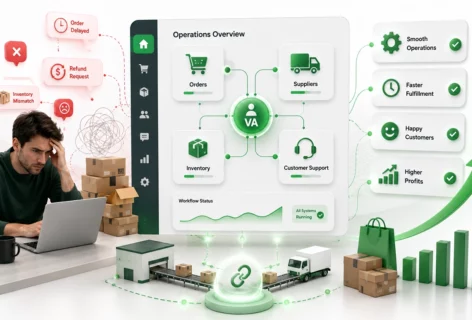
Instead of managing everything internally, many businesses now partner with structured support teams and a dedicated virtual assistant to keep operations organized. In 2026, Shopify’s growth is no longer only about attracting customers. It is about building operational systems that support long-term expansion.
Why Shopify Store Operations Become Difficult to Manage?
Most Shopify businesses start with simple workflows. A few products. A manageable order volume. Limited customer inquiries. But operations become significantly more complex once stores begin scaling.
As product catalogs expand and sales channels multiply, store owners suddenly need to manage:
- Product listing updates
- Inventory synchronization
- Customer communication
- Order tracking
- Marketing coordination
- Store maintenance
The challenge is not just workload. It is consistency. Customers now expect faster responses, accurate stock information, and seamless order fulfillment. Even small operational mistakes can affect customer trust and retention.
Some of the biggest operational challenges include:
| Operational Area | Why It Requires Attention |
|---|---|
| Product listings | Frequent updates and optimization affect catalog consistency and visibility |
| Inventory management | Stock mismatches create cancellations, delays, and customer dissatisfaction |
| Order fulfillment | Delays and fulfillment errors reduce customer satisfaction and account performance |
| Customer support | Faster and more accurate responses improve retention and trust |
| Store maintenance | Continuous updates, monitoring, and fixes consume operational bandwidth |
As operations grow, businesses often struggle to maintain efficiency using only internal resources. That is where Shopify Management Services begins playing a much larger role.
What Do Shopify Management Services Actually Include?
Many people assume store management simply involves updating products or responding to emails. In reality, Shopify Management Services are much broader. They focus on creating organized workflows that keep ecommerce operations running consistently behind the scenes.
These services commonly include:
- Product listing management
- Inventory updates
- Customer support coordination
- Order monitoring
- Store maintenance
- Reporting and analytics
For growing businesses, this structure reduces operational confusion and creates smoother day-to-day workflows. Many brands also combine these services with broader ecommerce store management services to support multichannel operations and long-term growth strategies.
A dedicated virtual assistant often becomes the operational bridge between store management and business expansion. Instead of founders constantly switching between tasks, operational responsibilities become more structured and organized.
Why Businesses Choose Shopify Management Services to Scale Faster?
Growth creates operational pressure. As stores expand, founders usually spend more time managing tasks than focusing on strategy. This slows business growth.
Many ecommerce owners reach a stage where daily operations consume most of their working hours. Product uploads, inventory checks, customer support, and order coordination. These tasks leave very little time for scaling initiatives.
That is why businesses increasingly rely on Shopify Management Services to reduce operational overload.
The impact becomes visible quickly.
| Business Function | Operational Benefit |
|---|---|
| Daily store management | Reduces repetitive operational workload and improves workflow continuity |
| Product updates | Maintains stronger listing consistency and catalog accuracy |
| Customer communication | Supports faster response times and more reliable customer interaction |
| Inventory tracking | Improves stock visibility and reduces synchronization errors |
| Reporting | Provides clearer operational visibility and performance tracking |
Once repetitive tasks are delegated properly, businesses gain more flexibility to focus on:
- Marketing strategies
- Product expansion
- Customer acquisition
- Brand development
- Revenue growth
Operational support creates room for scalability.
Why Businesses Outsource Shopify Management Instead of Hiring Internally?
Internal hiring works for some companies. But ecommerce operations often require flexibility, and traditional staffing models cannot always provide that.
Building an in-house team increases recruitment costs. It involves onboarding time and management responsibilities. That is why many businesses now prefer to outsource Shopify management instead.
Outsourcing creates a more scalable operational structure without significantly increasing internal overhead.
Lower Operational Costs
Hiring internally involves salaries, training, benefits, and long-term commitments. Outsourcing allows businesses to access operational support without maintaining large internal teams. For growing Shopify brands, this creates better cost efficiency.
Access to E-commerce-Specific Expertise
General administrative staff may not fully understand Shopify workflows. Businesses that outsource often gain access to professionals who already understand:
- Shopify operations
- Product management workflows
- Customer support systems
- Ecommerce reporting
- Inventory coordination
This reduces training time and improves workflow consistency.
Greater Flexibility as Stores Scale
Ecommerce businesses rarely grow at a fixed pace. Sales seasons, promotions, and product launches create fluctuating operational demands. Outsourced support provides flexibility that helps stores adjust operational capacity more easily.
Faster Workflow Execution
A structured support system allows operational tasks to move faster. Instead of waiting for internal approvals or overloaded teams, businesses can maintain smoother daily execution through a dedicated virtual assistant structure.
Better Focus on Business Growth
Perhaps the biggest advantage is strategic focus. When operational responsibilities are delegated properly, founders regain time to focus on expansion instead of maintenance. That shift often becomes the difference between operational survival and scalable growth.
The Role of a Dedicated Virtual Assistant in Shopify Store Operations
A growing Shopify store requires consistency. Tasks cannot simply be completed occasionally. They need ongoing supervision. This is why many businesses now work with a dedicated virtual assistant rather than general administrative support. Dedicated support creates accountability and workflow stability.
Some common responsibilities include:
| Operational Task | Business Benefit |
|---|---|
| Product uploads | Accelerates catalog expansion and improves listing consistency |
| Inventory monitoring | Reduces stock mismatches and improves availability accuracy |
| Customer support | Enhances response consistency and customer experience |
| Order coordination | Improves fulfillment reliability and operational flow |
| Store reporting | Provides structured operational visibility and performance tracking |
Many businesses also choose to hire a Shopify virtual assistant because it allows operational tasks to stay organized while the internal team focuses on higher-level growth activities.
10 Tasks You Can Delegate Through Shopify Management Services
One of the biggest advantages of Shopify Management Services is operational delegation.
Here are ten common tasks businesses often outsource:
1. Product Listing Updates
Managing titles, descriptions, pricing, and variants across products.
2. Inventory Management
Monitoring stock levels and preventing overselling issues.
3. Customer Support Handling
Responding to inquiries and maintaining customer communication.
4. Order Tracking Coordination
Updating order statuses and fulfillment workflows.
5. Product Image Uploads
Organizing product visuals and maintaining listing consistency.
6. Discount and Promotion Setup
Managing sales campaigns and promotional pricing.
7. Store Data Organization
Maintaining organized backend systems and product data.
8. Review Monitoring
Tracking customer feedback and identifying recurring issues.
9. Competitor Research
Monitoring market trends and competitor activity.
10. Performance Reporting
Preparing operational reports for better business insights.
Delegating these repetitive tasks creates operational breathing room for growing brands.
Why Ecommerce Store Management Services Matter More in 2026
Operational efficiency is becoming one of the biggest competitive advantages in ecommerce. Customers expect faster service, smoother experiences, and consistent communication. Stores with disorganized operations struggle to meet those expectations.
That is why ecommerce store management services are becoming increasingly valuable.
Structured operational systems help businesses maintain:
- Faster workflow execution
- Better store organization
- Improved customer experiences
- Reduced manual errors
- Clearer operational visibility
As ecommerce competition increases, backend consistency becomes just as important as marketing performance.
Why Many Shopify Brands Work with Professional Virtual Assistant Teams
Not all operational support creates the same results.
Some businesses struggle because they rely on inconsistent freelance support without structured workflows.
That is why many growing brands partner with professional ecommerce support teams instead.
The difference is usually operational consistency.
| Support Model | Operational Difference |
|---|---|
| General freelancers | Flexible support but often limited ecommerce workflow expertise |
| Dedicated support teams | Provide structured operational consistency and process continuity |
| Ecommerce specialists | Offer Shopify-focused workflow management and platform-specific execution |
At EcomVA, businesses receive operational support designed specifically for ecommerce workflows. From product management to store coordination, the goal is to help Shopify brands maintain organized systems while scaling more efficiently.
This combination of structure and ecommerce expertise allows businesses to grow without losing operational control.
The Future of Shopify Store Management and Virtual Assistant Support
Ecommerce operations are evolving rapidly. Automation tools and AI systems continue improving efficiency, but businesses still need human oversight to maintain workflow consistency.
That is why virtual assistant support is becoming a long-term operational strategy rather than a temporary solution. The future of ecommerce growth will likely depend on:
- Structured backend systems
- Consistent operational workflows
- Flexible support models
- Faster execution
- Operational visibility
Businesses that organize operations early often scale more smoothly than those relying entirely on manual management.
Conclusion: Shopify Growth Requires Operational Support
Scaling a Shopify business is about maintaining operational stability while growth accelerates. Businesses need systems that reduce operational pressure and improve consistency.
That is why more brands now outsource Shopify management.
Dedicated virtual assistant support manages daily operations more efficiently. Which businesses will grow successfully in 2026? They treat operational efficiency as a core part of their ecommerce strategy.
FAQs
1. What are Shopify Management Services?
Shopify management services help businesses handle daily store operations such as product listings, inventory updates, customer support, and order workflow management.
2. Why do businesses outsource Shopify management?
Businesses outsource operational tasks to improve efficiency, reduce internal workload, and maintain smoother workflows as the store grows.
3. What tasks can a dedicated virtual assistant manage for Shopify stores?
A dedicated virtual assistant can manage product uploads, inventory monitoring, customer support, reporting, and order coordination to keep operations organized.
4. Is it better to hire a Shopify virtual assistant instead of internal staff?
For many growing businesses, virtual assistants offer greater flexibility and lower operational costs compared to maintaining a full in-house team.
5. How do ecommerce store management services improve store performance?
These services create structured workflows that improve operational consistency, reduce delays, and keep store processes organized.
6. Can small Shopify stores benefit from management services?
Yes. Smaller stores often benefit from operational support early because it allows owners to focus more on marketing, growth, and strategic planning.
7. Why are dedicated virtual assistants important for ecommerce businesses?
Dedicated virtual assistants provide consistent operational support, helping businesses maintain reliable workflows while managing increasing store activity.