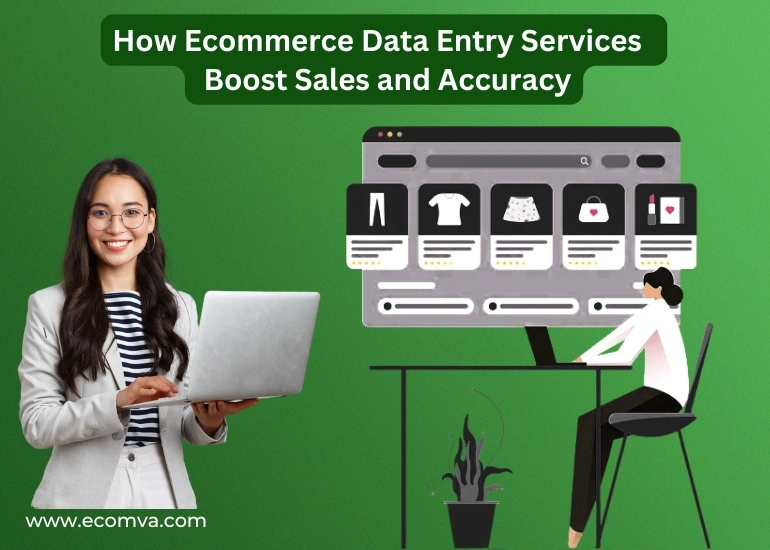
How Ecommerce Data Entry Services Boost Sales and Accuracy
Research shows that even trained staff make mistakes while entering data, i.e, about 100 to 400 errors in every 10,000 entries.
In ecommerce, every one of those errors can create problems. It could be the wrong price on a product, outdated stock numbers, or missing order details. These small mistakes lead to bigger issues—lost sales, cancelled orders, and unhappy customers.
As ecommerce stores grow, so does the volume of data. With more SKUs, more platforms, and more customers, the pressure to keep everything updated becomes harder to manage manually. That’s why many online businesses turn to Ecommerce Data Entry Services. These teams handle all the behind-the-scenes details—so product listings are correct, inventory is accurate, and customer records stay clean.
In this blog, we’ll break down what data entry really means in ecommerce, how it connects directly to sales, signs that show when your store needs support, and how a dedicated virtual assistant team can help your operations stay sharp.
What Data Entry Services Actually Do in an Ecommerce Environment
A strong data entry process covers more than just typing information. Here are the core tasks handled in ecommerce data entry services:
- Uploading product titles, descriptions, and specifications
- Organizing product images and setting correct attributes
- Maintaining price tags, discount entries, and stock levels
- Logging customer orders, returns, and shipping details
- Keeping vendor and compliance records up to date
- Cleaning CRM data and managing category structures
To help visualize how this works across platforms, here’s a table showing common responsibilities:
| Task Area | What’s Done |
|---|---|
| Product Listings | Entering and updating product data, specs, variants, and SEO tags |
| Inventory & Pricing | Syncing stock status and maintaining accurate price points |
| Order Records | Logging order status, return details, and invoices |
| Customer & CRM Data | Cleaning up contact entries and linking profiles to orders and support cases |
| Vendor & Compliance Data | Uploading contracts, invoices, and regulatory documentation |
Every one of these tasks plays a part in keeping the store’s operations efficient and customer-facing content accurate. Most of them fall under product data entry services, especially when you’re dealing with catalogs that change often or span multiple product types.
Why Ecommerce Sales Depend on Clean, Updated Data
Clean data isn’t just about tidiness—it directly affects conversions. Here’s how:
- Shoppers rely on clear, correct listings to make buying decisions. Any mistake in product info can stop a sale.
- Inventory mismatches can lead to overselling or order delays.
- Marketing efforts—like email campaigns or paid ads—only perform well if the linked data is consistent and complete.
- SEO rankings drop when product pages have duplicate content, missing fields, or wrong categories.
That’s why stores using ecommerce product data entry services usually see fewer support tickets, fewer return requests, and more reliable campaign results. The systems work better when the data behind them is right the first time.
Signs Your Ecommerce Store Needs a Data Entry Virtual Assistant Team
You don’t always notice bad data right away. But these signs usually appear as the store starts to scale:
- Too many listing errors or inconsistent product details
- Inventory numbers don’t match across your platforms
- Customer complaints tied to unclear or missing information
- Operations teams spending too much time fixing data manually
- Delays in processing orders, updating records, or pushing new listings live
If any of these sound familiar, it’s time to consider bringing in a specialist team. When you hire product data entry VA professionals, you don’t just offload tedious tasks—you remove bottlenecks from the sales process.
How EcomVA’s Data Entry Team Keeps Stores Running Smoothly
At EcomVA-Logo, we focus on the tasks that directly support ecommerce operations through reliable data. Our team doesn’t just enter information—we build structure, reduce manual errors, and keep everything in sync.
Here’s what our data entry specialists handle daily:
- Product data entry for new and updated items
- Managing pricing, discount setups, and variant configurations
- Uploading product images and specifications to match catalog structure
- Organizing and cleaning category and tag systems
- Maintaining order logs, return records, and shipment details
- Updating vendor and supplier entries for internal tracking
- Entering finance-related records like invoices and billing notes
- Routine audits for catalog accuracy and duplicate cleanup
Whether you have a catalog of 500 or 50,000 products, our ecommerce data entry services scale with your workflow. You can also hire product data entry VA support to handle full-time or project-based needs.
Example: How a Data Entry Team Supports a Product Launch
Here’s what a full cycle might look like when launching a new product:
- Your sourcing team finalizes specs and images.
- The data entry VA uploads the item into your system with correct attributes.
- Pricing, inventory, and stock codes are verified and synced.
- CRM tags and customer segments are updated for future promotions.
- Order processing is tested with sample SKUs.
- If it’s a seasonal item, it’s added to appropriate categories and promotional groups.
For products listed on marketplace platforms, structured entries also support Amazon A+ Content Services, which require accuracy and formatting that passes strict feed rules.
This kind of end-to-end accuracy is what keeps systems running without friction and lets other teams—like marketing, support, and operations—stay focused on growth.
Final Thoughts: The Role of Data Entry in Serious Ecommerce Growth
A growing ecommerce store doesn’t just sell more—it also handles more data. That includes product info, customer records, vendor details, and financial logs. If this data is disorganized or outdated, mistakes multiply and sales suffer.
With the help of reliable ecommerce data entry services, your business avoids those risks. You stay consistent, efficient, and ready to scale without delays. A skilled team removes manual bottlenecks and builds strong data foundations that make every part of your store run better.
If you’re noticing errors, delays, or mounting admin tasks, it’s time to consider ecommerce product data entry services. Reach out to a trusted provider like EcomVA and see how a proper data entry virtual assistant team can help.
FAQs
1. What are ecommerce data entry services?
Ecommerce data entry services involve adding, updating, and maintaining product, inventory, order, and customer data for online stores. These services ensure your store’s backend is accurate and ready for smooth operations.
2. Why should I hire a product data entry VA instead of doing it myself?
When you hire product data entry VA support, you save time and reduce errors. They handle repetitive tasks efficiently, keep your data consistent, and allow you to focus on sales, marketing, and customer service.
3. How do product data entry services help increase sales?
Product data entry services make sure your listings are accurate, searchable, and complete. This helps customers find the right products and reduces cart abandonment due to incorrect or missing information.
4. Can ecommerce data entry services support bulk product uploads?
Yes. Most ecommerce data entry services are equipped to manage large-scale uploads, catalog restructuring, and inventory syncs across platforms — without breaking your data flow or store layout.
5. Do data entry teams also handle Amazon A+ content services?
Yes, experienced teams can assist with Amazon A+ content services, ensuring that the enhanced content is uploaded correctly and matches the required formatting and data rules.